
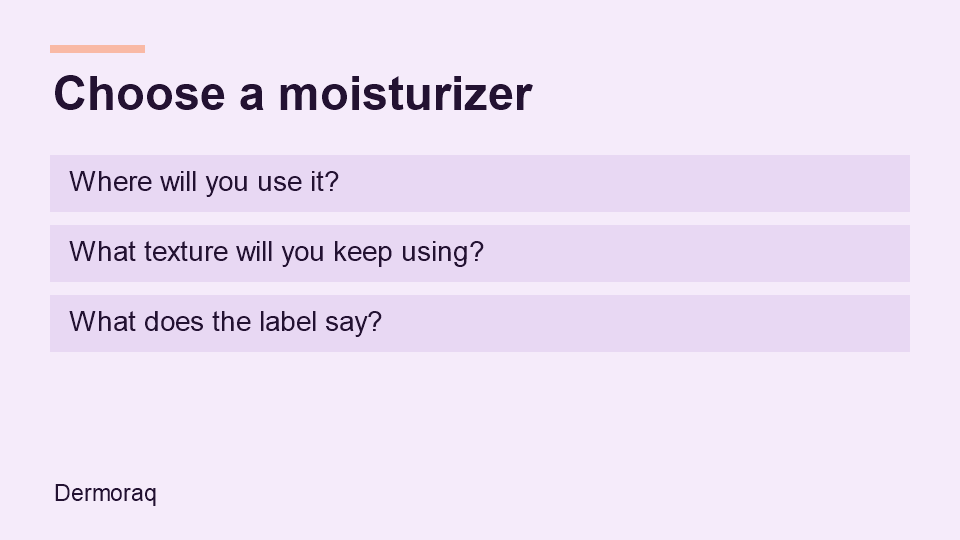
Start with the place and time you actually need a moisturizer. Dry cheeks after washing and a shiny forehead by noon can happen on the same face. The product you like on a cold evening may also feel heavy under makeup in July. Choose for the routine you have: where you will apply it, what you want it to feel like, and what the package says about using it.
Compare textures before you compare claims
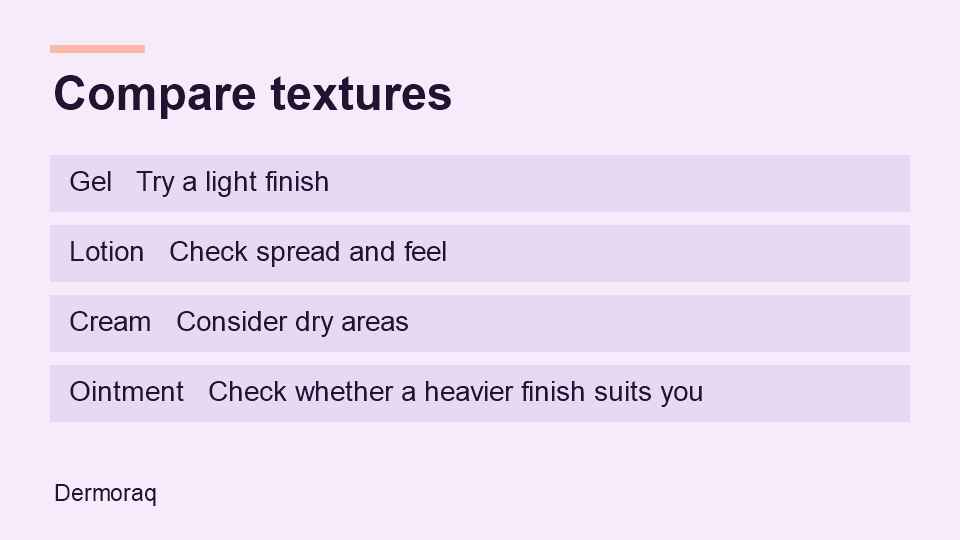
Gel, lotion, cream, and ointment are useful starting words when you are standing in a store. They give you a rough idea of how a product might spread and feel. The name alone cannot tell you how that particular formula will sit on your skin. Look at the label and, if you can, try a small amount as directed before buying a large container.
A gel or lotion may appeal to you if you dislike a rich finish. A light texture can be simple to spread over a larger area. Take a moment to see how it feels after it settles. The first swipe can feel very different from the finish you notice after getting dressed, applying makeup, or walking out into warm weather.
A cream is worth considering when a lighter product leaves a dry area feeling uncomfortable. For very dry skin, the American Academy of Dermatology favors creams or ointments over lotions. An ointment may feel heavier and leave a visible film. Think about your preferences before assuming you must use it across your face. If you are shopping specifically for dry cheeks, a product you tolerate there can be more useful than one you feel obliged to apply everywhere.
When comparing textures at home, describe them in your own words. Did it spread easily? Did the area feel sticky after several minutes? Was it comfortable after an ordinary walk? A word like rich can mean something different to two people. A note that you could still feel the product under your collar after a morning commute has a clearer meaning when you look back at it.
Decide where it needs to work
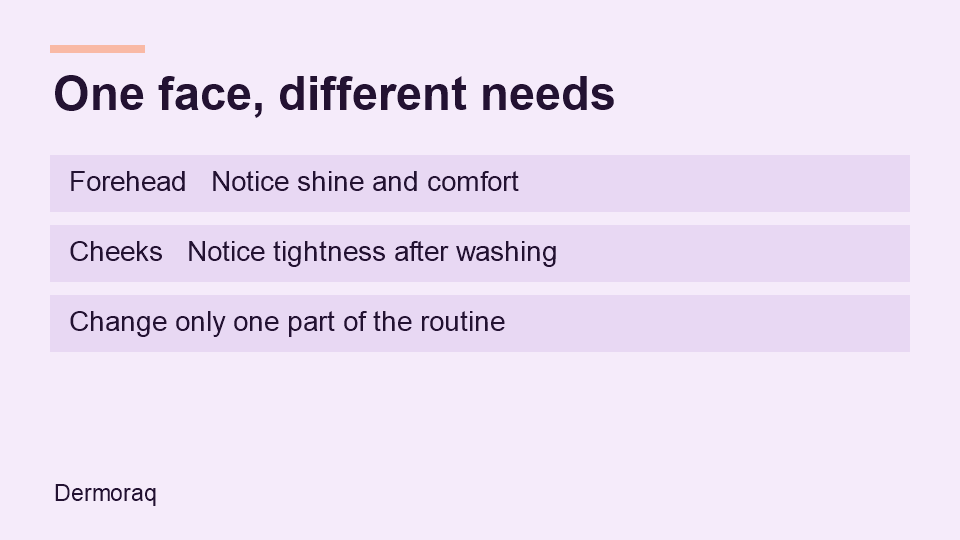
If your cheeks are dry but your forehead stays comfortable, you can pay extra attention to the cheeks. Some people prefer a lighter moisturizer across their face and a cream on a dry patch. Others use one product and apply it only where they need it. Start with the option that involves the fewest steps you can comfortably repeat. You can always adjust if you discover a reason to.
Oily skin can still feel uncomfortable after washing or in dry air. If you dislike moisturizer because the one you tried felt heavy and glossy, that tells you about the texture you tried. A lighter lotion may be easier to wear. If you are prone to clogged pores, the AAD suggests looking for wording such as noncomedogenic. Treat the wording as a way to narrow your choices. Your own response to a product still matters.
If your skin is usually comfortable, you can use a simple product as needed and adjust when your circumstances change. A weekend outdoors in cold wind may feel different from a week spent in warm, humid weather. Keep track of when the difference appears. You might only need to change when or where you apply the moisturizer instead of replacing the product.
Read the directions and ingredient information
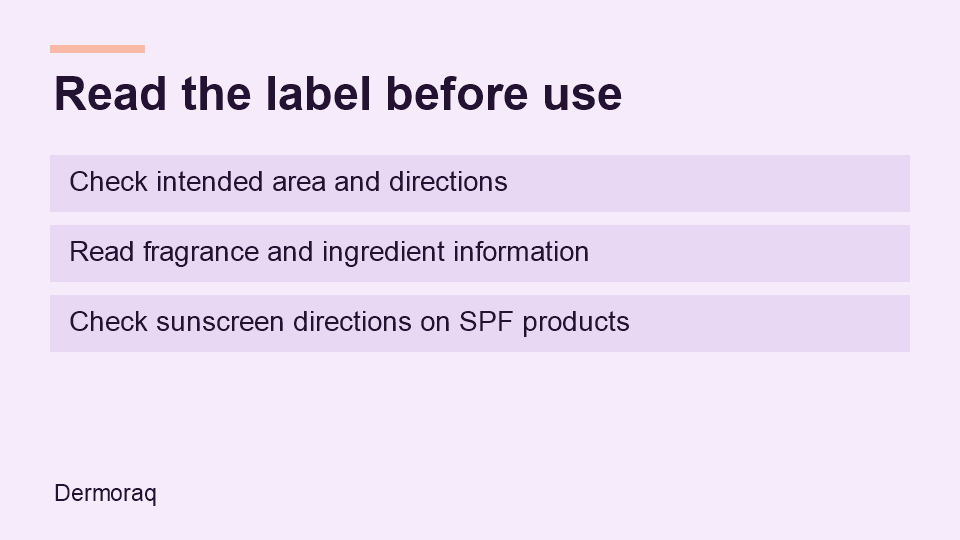
Check the intended area first. A product for hands or feet may have directions or a finish that make it a poor fit for the face. Check how the package says to apply it, where to avoid using it, and whether it lists warnings. If you know you react to an ingredient, scan the ingredient list for it every time you buy a new product. Packaging and formulas can change, even for a name you recognize.
If dry skin is easily irritated, a fragrance-free moisturizer is a sensible option to consider. The AAD distinguishes fragrance-free from unscented. A product sold as unscented can contain ingredients that hide the scent of other ingredients. Read the label and do not rely on whether the jar smells like anything when you open it. If you have a known contact allergy, follow the advice of your clinician about ingredients and products to avoid.
A moisturizer with SPF has another set of directions to follow. Check the sunscreen label for broad-spectrum protection, SPF, application, and reapplication. If you normally put moisturizer only on your cheeks, using a combination product the same way would leave other exposed areas uncovered. Think about whether you can follow the sunscreen directions for all the relevant areas when you use it. You can still use shade and protective clothing as part of your outdoor plan.
Build a routine around the product
Try putting the moisturizer near your cleanser. For dry skin, the AAD suggests applying moisturizer soon after gently patting skin dry, while some moisture remains. If the directions on your product require a different method, read and follow them. If you use a prescribed treatment, follow the timing and placement your clinician gave you. Put a copy of the instructions beside the product if you find yourself guessing about the order.
In the morning, notice whether your moisturizer works with the other layers you wear. A product that feels fine alone may be less comfortable under sunscreen and makeup. To compare two versions of your routine, keep the sunscreen the same and change the optional layer you are testing. Continue to use sunscreen according to the label. Reducing the amount of sunscreen is a poor way to judge whether a moisturizer works underneath it.
At night, you may prefer a texture you would not want on your face before leaving home. Try applying it earlier if you dislike the way a product transfers onto your pillow. If you are only using it near the cheeks, notice whether the rest of your face feels comfortable without it. Keep the arrangement simple enough that you can repeat it on a night when you get home tired.
Three situations you can recognize in a store
Imagine you wash your face at the sink and the tight feeling usually starts right afterward. A useful first shopping question is whether you want more comfort in that moment or a different finish later in the day. First check how you wash, especially pressure and water temperature. If the same dryness still shows up after a gentle wash, consider a fragrance-free cream and compare how your cheeks feel afterward on similar evenings.
Say you like how your face feels when you leave home but dislike a shiny or sticky forehead in the afternoon. Test the finish of your current product in a small area or try a lighter texture as directed. If it works well on your cheeks, you may still want it there. A note that says where it felt heavy is more useful than replacing everything based on how one part of your face looked at lunchtime.
Now picture someone who wants one product for mornings when they have five minutes to get ready. A pump or tube that is easy to handle may matter more to them than a large jar. If they are also considering a moisturizer with sunscreen, they should read the sunscreen directions and see whether those fit the way they actually apply it. Think about the steps you can do on an ordinary morning, rather than the steps you would do with more time.
Try one change and take a useful note
Pick a question you can answer without changing several products at once. For example: does this lotion feel comfortable on my cheeks two hours after washing? Read the product directions, and keep the rest of the routine familiar while you try it. If you tend to react to skincare products, read the AAD guidance on testing skincare products on a small area before routine use. Testing a small area cannot guarantee that a product will suit you.
Make a brief note about where you used it and how it felt. You might write, “Applied the new lotion to both cheeks after the usual evening wash. Felt comfortable at bedtime. Forehead unchanged.” If a fragrance, texture, or container made you less likely to use it, write that down too. This is a shopping decision as well as a routine decision. There is little value in buying a large amount of a product you keep avoiding.
If you notice ongoing burning, a rash, or another reaction you suspect is related to a new product, stop using it. If symptoms are severe, persistent, or worsening, seek clinical advice. Keep the packaging or take a picture of the ingredient list so you can identify what you used. Avoid introducing several new products while you are trying to make sense of a reaction.
Compare the price that fits your actual use
Look at the container size and how often you expect to reach for it. A large tub may be useful when you already know you like the product, particularly if you use it on a large area. A smaller package can make sense for a first purchase. You may pay more for each ounce, but you also have less left over if you dislike the finish or discover the packaging is awkward to use.
You can also compare what you already own before buying anything. Check the label and expiration information. A cream you already like on dry areas might solve the problem you were about to shop for. If you need a product for a different area, such as one intended for the face rather than the body, make that a condition of the purchase. The simplest reason to buy something new is that you can explain the job your current product does not do.
Compare two options without buying both again
If you already have two products at home, test them against the same question. Suppose both claim to be suitable for dry skin. Use the first one as directed on an ordinary evening, then try the other on a comparable evening. Keep your face wash, water temperature, and application area steady when you can. You are looking for differences you can describe, such as which one spreads without tugging or which feels comfortable by bedtime. The goal is to see which choice fits the job you picked.
When one product seems easier to use, consider why. The formula may feel lighter, but the bottle might also dispense more predictably. A cap you can open with damp hands or a package you can set upright on a small sink makes a difference on a busy morning. Write down whether the advantage came from the texture, the instructions, or the container. That helps you choose a replacement later if the product changes or becomes hard to find.
If the two options both feel fine, pick the one you are willing to use as directed. Save your time for the routine step that is actually difficult. You can return to the comparison when the weather changes or when you notice a specific area feels dry again.
Questions to answer before buying a second moisturizer
Do I need one for morning and one for night? Start with one if you like its finish at both times. A second texture earns its place when your needs change enough to justify it, such as preferring a richer cream at night and a lighter feel under sunscreen.
Does a thicker product always work better for me? The AAD recommends a cream or ointment rather than a lotion for very dry skin, but your preferred texture also depends on the area and how you use the product. If a heavy product stays in a drawer because you hate wearing it, try a workable alternative or ask a dermatologist what would suit the dryness you are experiencing.
Should I switch when the weather changes? You can keep using the same product if your skin feels comfortable. If an area changes, pay attention to when it happens. Cold outdoor air, hot showers, and heated rooms can all be part of the pattern you observe. Change one part of the routine and see whether it helps on a similar day.
Can I use my body lotion on my face? Read the intended use and instructions first. Think about the texture, any fragrance or ingredients you know you react to, and how it feels around sensitive areas. A product that you like on your arms may be too heavy for you on your face. Use a product in the areas its label specifies.
What if moisturizer never seems to help? Review the cleanser, water temperature, texture, and timing before changing several products in a row. Persistent dryness, cracking, or recurring irritation deserves professional advice. Bring the moisturizer name and describe what you notice before washing, right afterward, and later in the day.
Make a shopping list with three lines
On the first line, write the area where you will use the product. On the second, write what you want to be different. On the third, write the directions or ingredients you need to check. For example, “cheeks after the evening wash, want a comfortable finish by bedtime, check fragrance and face directions.” That list gives you a way to compare two packages in a few minutes. It also gives you a reason to put a package back when its main promise has little to do with the job you chose.
If you are buying for another area, give it a separate line or list. A product you can spread easily over arms after a shower may not be the texture you prefer near your nose. Keep the intended area in view. If the products you’re comparing are both suitable, consider which instructions you can realistically follow and which package you can use without fuss. The letter size on the package, how the cap opens, and how easily you can dispense it matter every time you use it.
Compare a familiar product with a candidate
Start by noting what the familiar one does well. If it feels comfortable after an evening wash, keep that observation even if you dislike the finish in the morning. Check its label and compare the new options against the part of the routine that needs a change. A different texture may help on workdays without making the first product useless. If the candidate has the same intended area and a similar feel, consider whether its price or package brings a real improvement. You do not need to switch because a formula is new.
Use either product according to its directions on comparable days. If you normally wash at the sink, keep doing that while you try the new option. If one day you use several other products and the next day none, write down what changed before making up your mind. You can still decide what felt comfortable. Just avoid assuming a single ingredient explains the result. A usable comparison includes enough detail to help you choose whether to keep, replace, or set aside the product.
Choose for places where your routine changes
At home, you may be able to use a jar after washing and wait before putting on another layer. At work, you may have a small sink and little time. A suitable tube or pump with readable instructions might be a better fit there. Decide whether you need both versions. If the same familiar product is comfortable in both places, consider carrying it in an appropriate labeled package. If it is inconvenient away from home but suits your evening routine, keep that job and compare another option only for the second setting.
On a trip, it can be difficult to tell whether a change is due to the product, the weather, or the water temperature. Take familiar care in labeled containers if possible. If you buy something away from home, check the intended area and directions in the local packaging. Keep the label for later. The same name can appear on a different formula or container, so compare the product that is actually in front of you. If you know you react to an ingredient, check for it even when the name looks familiar.
Give the packaging a practical check
Consider what it would be like to use the package after washing. Can you open it with damp hands? Can you read the directions when you need them? Will it fit where you intend to keep it? A product that scores well in the store may spend weeks unopened if you have nowhere convenient to put it. A smaller package may cost more per ounce but can give you a chance to see whether you use it regularly. Use the package according to its directions and check expiration information before you decide to keep an older one.
A large container makes more sense once you know you like the formula in a setting where you use it frequently. A smaller size can be practical for a product intended for one area. If you normally apply it in a particular spot, store it there safely and keep the label in reach. That can make the difference between buying something suitable and actually having it where you need it when the skin feels uncomfortable.
End the comparison when you have the answer you needed
Review the three lines you wrote before shopping. If you know which product is comfortable where and when you want to use it, you have enough to make a choice. Keep the result for the next purchase and move on to the rest of your day. If you used it differently from the directions or several other things changed, consider whether you need another ordinary comparison. Do not purposely repeat a reaction. If symptoms persist, worsen, or concern you, seek advice and bring the current product information with you.
It is also reasonable to keep the product you already have. If the new candidate feels no better in the original setting, use that observation to avoid a second purchase or to adjust the original question. Perhaps the real difficulty was a hot wash or trying to apply an ordinary lotion in a rush. Fixing the practical issue gives you more value than continuing to compare products that already do the same job.
Take the decision back to your sink
Think of one moment when your current routine falls short. Maybe your cheeks are tight after the evening wash or your morning moisturizer feels too heavy under sunscreen. Choose a product or a small routine change for that moment. Keep the directions where you can read them, give yourself a few comparable days to notice how it feels, and let that experience guide what you use next. A moisturizer is easier to choose when the job is specific.
Read the gentle face washing guide