
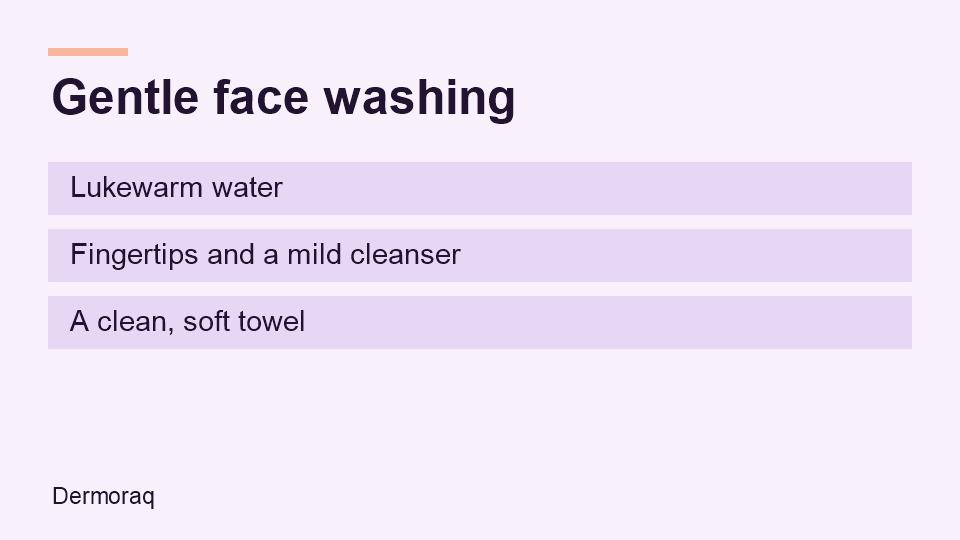
Start with lukewarm water, a gentle cleanser, and your fingertips. Rinse and pat your face dry with a clean, soft towel. That is the everyday technique described by the American Academy of Dermatology. If you are learning to wash your face without leaving it uncomfortable, watch how you wash as closely as you watch what you use. The same cleanser can feel different at a warm sink than it does under a very hot shower.
At the sink: walk through one gentle wash
Before turning on the tap, put a clean towel within reach. If you like to tie your hair back, do that now. Those two small preparations make it easier to rinse your hairline without getting distracted by wet hair and to dry your face without grabbing whatever towel happens to be closest. Take a moment to read the cleanser label if you have never used it. Use the amount, contact time, and application area stated there. This guide describes a typical rinse-off face wash. Products intended for different routines can have different instructions.
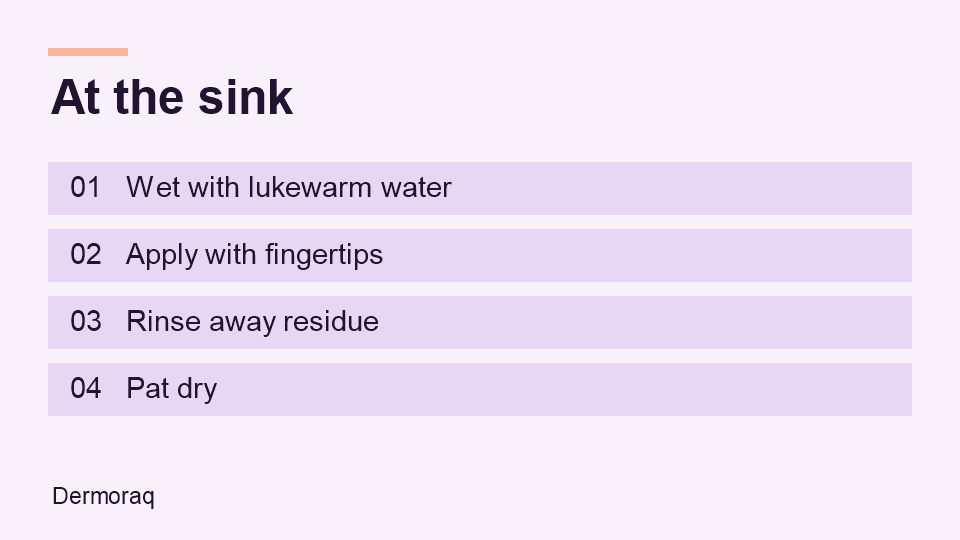
First, wet your face with lukewarm water. If you have been running the hot tap to clean a sink or remove makeup from a cloth, check the temperature before bringing water to your face. Lukewarm should feel comfortable. You do not need a thermometer, and you do not need to alternate hot and cold water to finish the wash.
Spread the cleanser over the skin with your fingertips. A light touch is enough to move the product around. Work over the forehead, cheeks, nose, and chin. It can help to follow the same loose sequence each time, particularly if you are inclined to spend most of the wash on one area such as your nose. Avoid rubbing a spot repeatedly just because it feels oilier than the rest of your face. Follow any directions about avoiding the eye area.
Rinse with lukewarm water. Look near the hairline, around the corners of your nose, and along the jaw, where it is easy to miss a little cleanser. If you see foam near your ear, rinse it away instead of wiping hard to remove it. The goal is to remove the product, so a splash of cool water at the very end is a matter of preference rather than an essential step.
Pat your face with the soft towel. Put the towel against the skin and lift it rather than dragging the cloth down from your forehead. If dry areas need moisturizer, follow with a product you know suits you, according to its label. When you have finished, hang the towel to dry. If the towel feels stiff or rough, choose one that feels comfortable against your skin rather than pressing harder with the one you have.
Use your fingertips instead of tools
Brushes, sponges, and rough washcloths can make it difficult to tell how much pressure you are using. The AAD recommends applying cleanser with your fingertips. If you like a cloth because it keeps water from spilling down your arms, try using it to wipe the sink or to blot your face after rinsing. Let your hands handle the actual wash. You keep the part of the habit that makes your bathroom easier to use and remove the rubbing that can make washing uncomfortable.
A common cue for pressure is the way you hold your hand. If your fingertips are pressing so hard that you can see the skin move from side to side, ease up. If you tend to press harder when you are in a hurry, shorten the setup by keeping the towel and cleanser ready. Rushing is often a problem with the routine around the wash. Buying another tool rarely fixes that part.
What to check if your skin feels tight afterward
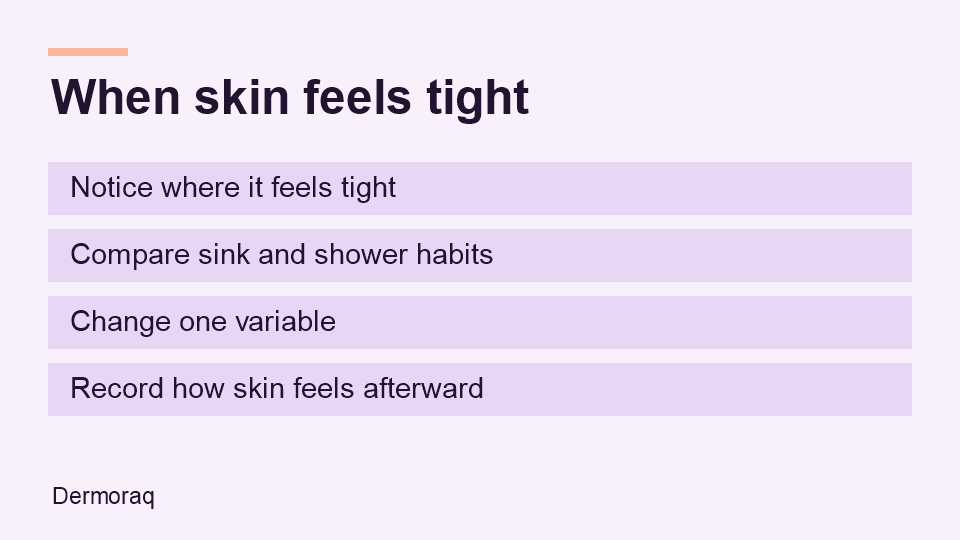
Notice where and when the feeling starts. Tight cheeks as soon as you get out of a shower tell you something different from tightness that shows up near the end of a cold day. Dryness around the sides of the mouth is also a more useful detail to record than a general note that your whole routine feels wrong. Write down the part of your face involved and how long the feeling lasts. You are collecting a description that helps you compare washes, rather than trying to diagnose your skin.
Look for a difference between washing at the sink and in the shower. You may use warmer water in the shower, stay under it longer, or work the cleanser over your skin while doing something else. Try one wash at the sink with comfortable water, the same cleanser, and the same moisturizer. Keep your touch light. If you want to find out whether a rough cloth is the issue, compare two otherwise similar evenings without changing the temperature and the cleanser at the same time.
If you are still uncomfortable after gentle washing, check the product label. Are you using a face cleanser, or are you borrowing a body wash or a scrub because it is already in the shower? Are you using more than the label directs because there was almost nothing left in the bottle yesterday? These are ordinary things you can correct before drawing conclusions about an ingredient. A gentler cleanser may be worth considering if your current one consistently leaves you uncomfortable.
Do not keep using a product that causes an ongoing reaction. If irritation is persistent, severe, or getting worse, seek advice from a qualified clinician. Bring the product name or a photo of the ingredient list, and describe where and when the discomfort occurred. That gives the clinician more to work with than a list of products you are thinking of buying.
How often should you wash?
The AAD recommends limiting face washing to twice a day and after heavy sweating. An evening wash is a useful anchor if you wear sunscreen or makeup or spend the day commuting. In the morning, some people are comfortable rinsing with water and others prefer a gentle cleanser. Think about what you need to remove and how your skin feels afterward. If you already have a morning rhythm that works, you can keep it while you improve your technique at night.
After heavy exercise, wash gently when you can. A towel is handy to blot sweat while you finish a workout, but avoid rubbing your face with the same section of towel you used to wipe exercise equipment. If you shower at the gym and the water is very hot, you can wash at the sink or lower the temperature before washing your face. Keep a small amount of your usual cleanser in its labeled travel container if that makes the routine easier to follow.
Consider one day with a morning run, a work shift, and a dinner out. If you wash after the run, that can be your morning wash. You can wait until the end of the day to remove the sunscreen and makeup you used afterward. You do not need to fit a face wash before and after each event. For outdoor exercise, make your sun protection plan separately and follow your sunscreen label when you reapply.
Makeup, sunscreen, and the idea of a second cleanse
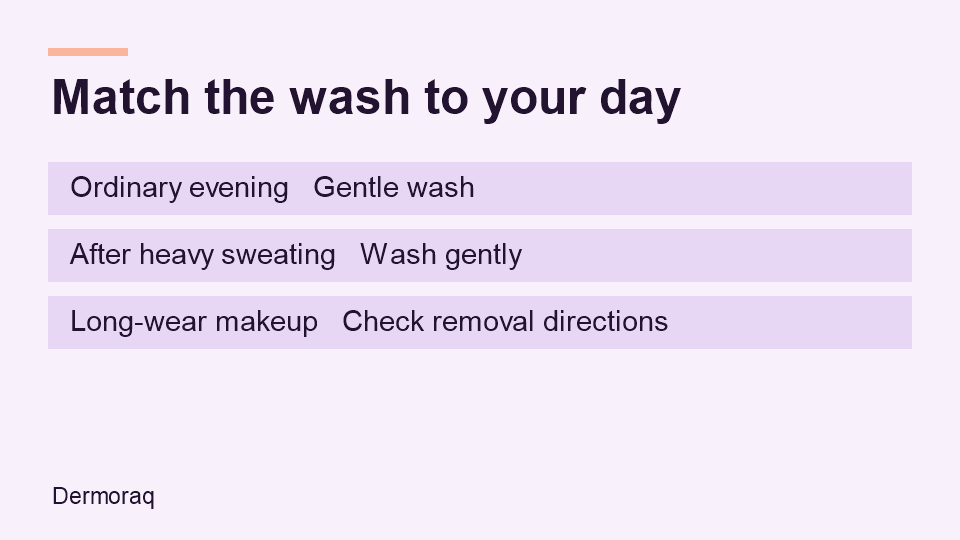
On an ordinary evening, one gentle rinse-off cleanser may do the job. See what your makeup and sunscreen labels say about removal. Some products have specific directions, especially around the eyes. If the label calls for a separate remover, use a product intended for that area and follow its directions. A second cleansing step makes sense when it does a particular job. It is easy to turn it into an automatic extra wash even on days when there is nothing different to remove.
If you still see visible makeup after rinsing, avoid rubbing harder with your towel to get it off. Identify what remains and where. Is it a trace of eyeliner at the lash line, or cleanser around the jaw? They call for different responses. For a leftover cleanser, try another gentle rinse. For makeup, check the makeup and remover instructions. If the residue is simply the finish of a product you dislike, that is information about the product and its fit with your routine.
How to choose a cleanser you will actually use
Read the basic instructions before comparing the claims on the front of the bottle. Check where the cleanser can be used, whether it rinses off, and whether it has directions that matter to your routine. Think about how you travel, whether you wash at the gym, and when you remove eye makeup. These details may matter more than whether the bottle says it is designed for a particular type of morning or evening.
Pay attention to comfort during the wash and after you rinse. If the cleanser makes a great deal of foam and your face feels fine afterward, the foam is just a feature of the formula. If the cleanser barely foams and it removes obvious residue, that can be fine too. If you have previously reacted to a particular ingredient, check the list rather than relying on the appearance of the bottle. When you try a new cleanser, keep other parts of your routine familiar so you can tell what changed.
Make the routine fit real life
If you often skip washing because you get home late, try doing it when you change out of your work clothes. Leave the gentle cleanser beside the sink and put a clean towel where you can reach it. If your morning is crowded, decide ahead of time whether you prefer a water rinse or a quick wash. That one decision can save the time spent standing in front of the shelf choosing between three bottles.
If you wear makeup on only a few days each week, keep your remover in a place where you can find it on those evenings. If you work in a dusty setting or do an outdoor activity after work, consider whether you would rather wash once you are done for the day. A routine is easier to evaluate if you have at least a few days when you use roughly the same water temperature, pressure, and products.
If you share products with someone at home, give each person a chance to choose what feels comfortable. A cleanser bought for a partner’s routine might be perfectly suitable for you, or it might leave your cheeks feeling different. Try your own wash at a time when you can notice how it feels afterward rather than right before a rush out the door. If you prefer a travel bottle, keep a copy of the directions with it, especially when someone else could mistake the contents for a different product.
A small storage change can also help with busy mornings. Keep the cleanser beside the items you already use and put a spare towel where you can find it. If you wash at different sinks during the week, set up both places for a gentle wash before deciding you need another kind of cleanser.
What to do after one uncomfortable wash
Give yourself a moment to check exactly what happened. You might realize you used hotter water than usual, put on a mask immediately afterward, or used the wrong towel. Stop using a product if you suspect it is causing an ongoing reaction. For a simple technique issue, choose a specific change you can repeat next time. Write down “used fingertips instead of the cloth” or “rinsed at the sink with lukewarm water.” Those notes say what actually happened. If symptoms continue or worsen, get clinical advice rather than trying a series of new products to make the problem disappear.
Short answers for common sink-side questions
Do I need to scrub around my nose? Use the same light touch there that you use on your cheeks. Rinse carefully where the nostrils meet the face. No extra pressure is needed to reach that area.
Can I wash my face in the shower? You can if you can keep the water comfortably lukewarm and apply and rinse the cleanser gently. If the shower leads you to wash with hotter water or rush, try washing separately at the sink.
Does a towel need to be damp or dry? For drying after a rinse, use a clean, soft towel and pat gently. A cloth used for another task, such as removing makeup, should be used according to the product directions. You can keep a separate towel for drying so you know which one to grab.
What is the simplest way to start tonight? Set out a gentle face cleanser and a clean towel. Wet, apply with your fingertips, rinse, and pat dry. If you want to build the rest of your routine around the wash, start with the AM and PM guide below.
Read Your First Skincare Routine
Sources
American Academy of Dermatology: Face washing 101
American Academy of Dermatology: Skin care on a budget