

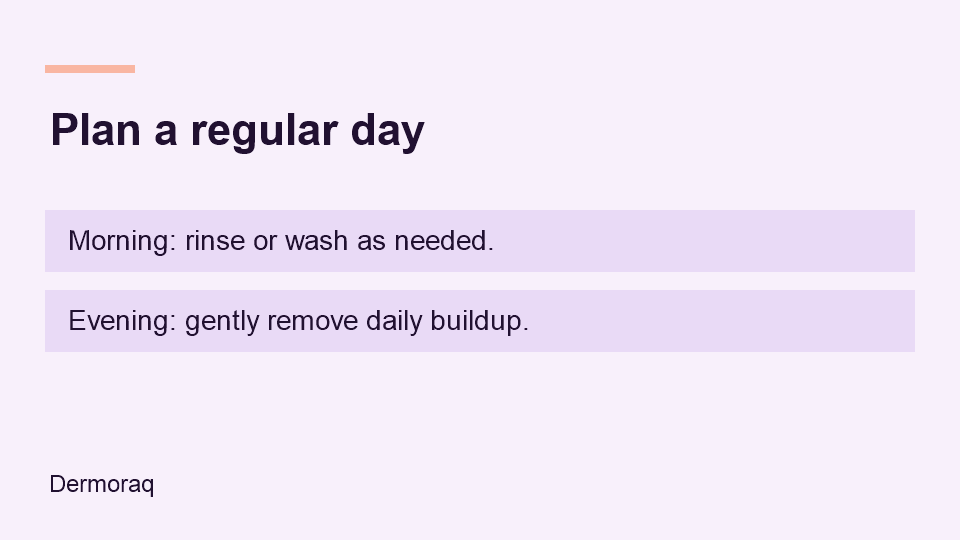
For everyday face washing, the American Academy of Dermatology advises limiting washing to twice a day and after heavy sweating. A gentle evening wash is a useful starting point. In the morning, some people prefer a rinse with water, while others like a gentle cleanser. Think about what you need to remove, what else you did that day, and how your face feels afterward. The schedule needs to fit the day you are living.
Start with the evening
If you wear sunscreen or makeup, the evening gives you a clear reason to wash. Begin when you are finished wearing those products for the day. Use a gentle cleanser and lukewarm water. Apply with your fingertips, rinse thoroughly, and pat dry. Check specific makeup or sunscreen directions when a separate removal step is needed. If you are about to go outdoors again, use the sunscreen label to decide when to apply or reapply rather than treating a face wash as the end of your sun protection for the day.
The simplest schedule is the one you can repeat when you get home late. Some people wash soon after getting home. Others link it to brushing their teeth. If you regularly skip it because you wait until you are exhausted, move it earlier on evenings when that makes sense. Keep a towel and cleanser where you will reach them. A missed night does not change the technique you use tomorrow. Resume your ordinary gentle wash.
Try the morning that feels comfortable
If you wake up comfortable and have little to remove, a rinse with lukewarm water can be a practical choice. If you feel oily, notice visible residue, or prefer a wash, you can use a gentle cleanser. Both give you a starting point. Compare how your face feels afterward, especially in areas that often feel tight. Keep your other steps familiar so your comparison is actually about the wash.
A morning wash does not have to feel exactly like the evening wash. You might have makeup or sunscreen to remove later, while the morning can be a straightforward rinse. If you are starting a routine, choose something you can do on an ordinary workday. If the result is comfortable, you can keep it. Do not assume a mild morning rinse has failed because you did not use a full list of products.
Wash after heavy sweating without making the day complicated
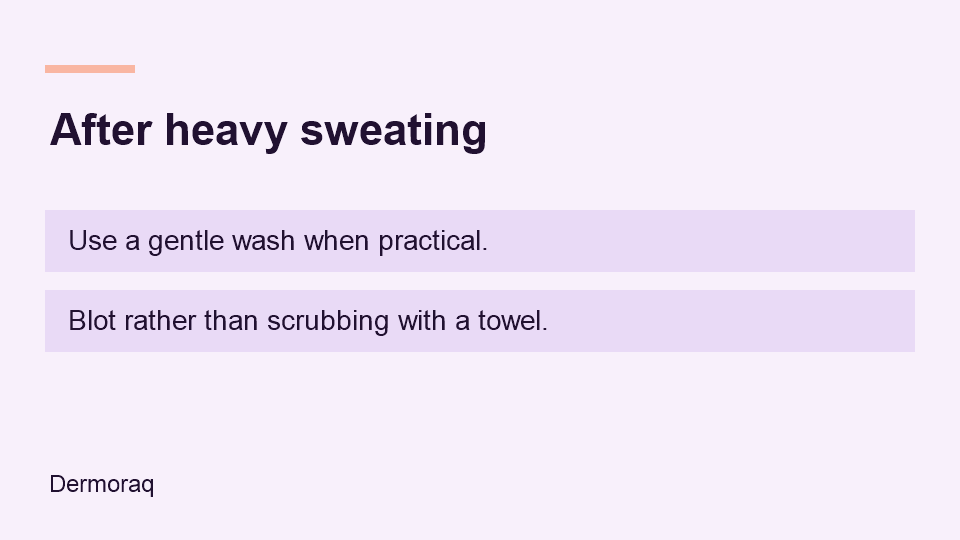
The AAD advises washing after heavy sweating. If you go for a run early and wash afterward, that can be your morning wash. There may be no need for a separate wash immediately before it. Blot sweat with a clean towel rather than rubbing. At the sink, adjust the water to a comfortable temperature and use gentle pressure. If you’re exercising outside, follow the label for sunscreen application and reapplication, including its directions after sweating.
Consider a day with an afternoon workout. You might have rinsed in the morning, applied sunscreen, and gone to work. After training, you can wash gently and consider what you will be doing next. If you are going back out, follow your sunscreen directions. If you are home for the evening and have finished wearing the day’s products, you may already have done the wash you would normally do later. Plan around what is on your face instead of counting each event as a reason to wash twice.
If you do several activities in one day, keep the technique in view. There is a difference between gently washing after you have been sweating heavily and scrubbing again every time you think your forehead looks shiny. If you notice a pattern of discomfort on busy days, record the number of washes, the temperature of the water, and whether you rubbed with a towel. Those details give you an idea of what to change.
Oil, tightness, and other reasons to reconsider frequency
If you wash again because you see shine at lunch, first ask what that wash needs to do. Your forehead can look shiny while your cheeks feel tight. You might do better with a comfortable morning routine and one evening wash than with extra scrubbing in the middle of the day. If you are following a treatment for a skin problem, use the directions you received. Ask your clinician how to adapt the washing schedule if it keeps causing discomfort.
If the sides of your face feel tight every time you wash, consider which parts of the technique change from day to day. Do you wash with hotter water in the shower? Do you spend more time on an area where you tend to see residue? Try one comparison, such as washing at the sink with comfortable water and the same cleanser. Keep the rest of your routine the same when practical. If your skin feels dry afterward, consider moisturizer according to its directions. If symptoms persist, worsen, or concern you, get professional advice.
A weekly plan with room for variation
Write an ordinary day on one line. It might say “morning rinse as needed, evening gentle wash.” On the next line write a workout day. It might say “wash after the early run, evening wash when done wearing sunscreen.” The wording will be different if you work at night or exercise around dinner. The point is to place washing where it serves a job. Use these lines as a reminder, not a tally that you try to fill every day.
Also think about the places where you need to wash. If you only have your usual cleanser at home, you may not want to wash at the gym. A labeled travel size and a clean towel might make the after-workout routine easier. Or you may choose to wash when you get home if that is practical. Avoid rough wiping just because you are away from your usual sink. Have an easy way to read any sunscreen directions you need when you head outside again.
You can try the plan for a few ordinary days, then review what you noticed. Which wash made sense? Was there a time you washed out of habit even though you had already done it after exercise? Where did your skin feel comfortable or tight? Change one part that would make the next week easier. A schedule that works is one you can use without getting your face wet every time you pass the bathroom mirror.
Common questions about washing frequency
Can I wash only at night? The AAD discusses a gentle evening wash and using water or a gentle cleanser in the morning in its budget skincare guidance. If a rinse feels comfortable in the morning, you can use it as your starting point. Consider a gentle wash after heavy sweating, and follow advice from your clinician if you have specific directions.
Should I wash every time I reapply sunscreen? Follow your specific sunscreen label for application and reapplication. Do not add a separate cleansing step by default. When you are finished wearing sunscreen for the day, follow its removal instructions if provided and use a gentle wash as appropriate.
Do I need a stronger cleanser if I wash less often? There is no need to make up for a skipped wash by applying more pressure or buying a harsh product. Match the method to what you need to remove. That could be one gentle wash or a directed removal step for certain makeup. Keep water comfortable and use your fingertips.
What if I cannot tell whether my schedule suits me? Take a note of when tightness or irritation appears, and compare similar days. Choose one change, such as rinsing in the morning instead of using cleanser, and describe the result after a few uses. If a product causes an ongoing reaction, stop using the suspected product and get advice if symptoms persist or worsen.
Fit the routine around a shift
If you work overnight, morning and evening may be poor labels for your day. Think about when you wake up, when you finish your shift, and when you stop wearing makeup or sunscreen. You can link one wash to the end of that stretch without trying to follow the clock used in someone else’s routine. Keep the same gentle technique.
On a changeover day, make a note of when you last washed and what you have put on your face since then. If you already washed after a long commute or heavy exercise, you may not need another wash immediately before lying down. When you have a reason to cleanse, do it gently and rinse thoroughly. A routine built around tasks can survive changes to your schedule more easily than one tied to a fixed hour.
Start with the next wash
Choose one moment you can make more comfortable. Use lukewarm water at the sink, set a clean towel within reach, or move your evening wash to a time when you are more likely to do it. Check the result on an ordinary day. A useful frequency is easier to find once the wash itself is gentle and has a clear purpose.