
Stop using the product you suspect
If a product causes an unexpected skin reaction, the AAD recommends gently washing it off and discontinuing it. Follow product-specific instructions, including warnings. If it is a prescribed treatment, ask the prescriber or a pharmacist how to proceed.
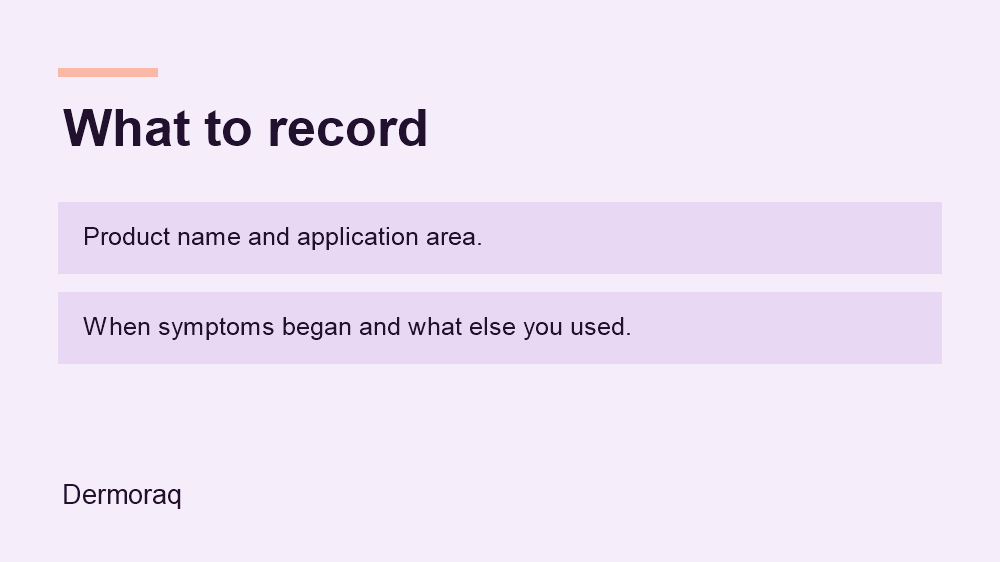
Get help when the reaction needs it
Seek medical advice when irritation is severe, persists, or worsens. Keep the package and note when and where the symptoms started. Do not treat a concerning reaction as a reason to experiment with several new products.
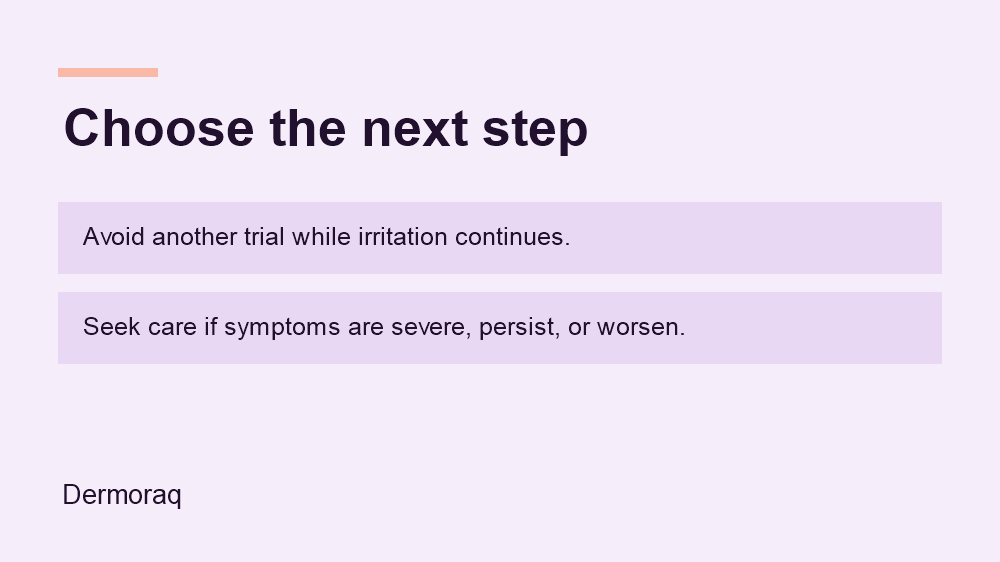
Start with the reaction in front of you
If a new cosmetic or skincare product unexpectedly stings, stop applying it. If the product is still on your skin, the American Academy of Dermatology advises gently washing it off after a skin reaction. Follow any instructions on its label, including directions for accidental exposure or for getting the product in your eyes. Avoid scrubbing while you rinse. Another scrub, peel, or cleanser is unlikely to make it easier to understand what just happened. If the product is prescribed, contact the prescriber or a pharmacist for advice about the reaction and what to do before the next dose.
If you have trouble breathing or swallowing, or rapidly develop swelling of your lips, tongue, or throat, seek emergency medical help. If a reaction is painful, severe, spreading, persistent, or getting worse, seek medical advice promptly. Do not wait for a skincare experiment to tell you whether it is serious. If the symptoms are mild and improving, you can still make a note of the product and symptoms so you have something useful to refer to later.
Make a record while the details are fresh
Write down the product name, where you used it, and approximately when the sensation started. You can also note whether the area was already uncomfortable and what else you used there that day. A sentence such as “new lotion on both cheeks after my usual wash, burning began within a few minutes” gives you a clearer account than “my face reacted to everything.” Keep the packaging and its ingredient list. If you consult a clinician, the actual product and the sequence may help them ask more useful questions.
If you used several new products on the same evening, write them down in order. Include products you took off as well as products you left on. If you washed in hotter water than usual, used a tool, or rubbed a particular area, record that too. These facts do not settle the cause. They let you describe the conditions without guessing whether an ingredient, the way you applied it, or a separate issue was involved.
Avoid using a second new product to solve the first one
A reaction can make you want to put something else on right away. Read the label and follow any advice from your clinician. For a mild reaction to a product trial, the AAD discusses a cool compress as a way to relieve discomfort. You do not need to start a collection of new soothing cosmetics while you are still working out what happened. If you are unsure about what is appropriate for the affected area, seek advice rather than trying multiple products in succession.
Keep your next decisions small. Put the suspected product aside and leave its label readable. If another optional item also causes discomfort, stop using it and make a note. If something you have been prescribed is involved, tell the prescriber how you used it and what you felt. You can ask whether the directions should change or whether you need to be evaluated. A general skincare sequence cannot answer those questions for a specific prescription.
Different situations call for different follow-up
Consider someone who tries a moisturizer for the first time and feels burning across both cheeks. They can stop, gently wash off the product, and record where and when the sensation began. If the symptoms continue or worsen, it makes sense to get medical advice. The next shopping task is to identify the product and discuss the reaction, not to guess which line on the label caused it from a single use.
Now consider someone who notices discomfort on one small area after using makeup remover, cleanser, and a new cosmetic. It may be difficult to tell what contributed. The useful information is where it happened, which products touched that area, and what felt different that day. If an eye is involved, check the label’s instructions and seek help as appropriate. Rubbing the area again to see which product stings is an experiment you do not need to run.
Finally, consider someone who has been given a treatment for a skin condition. If it causes unexpected symptoms, the prescriber or a pharmacist can advise based on the actual medication and how it was used. Have the product name, directions, and symptom notes nearby. You might be asked when it was applied, whether other products were used right before it, or whether the reaction is spreading. You can prepare that information before making any change based on a general article.
Think about future trials after the reaction is resolved
The AAD describes a small-area trial for a skincare product before routine use. Follow the product’s own directions for application and contact time. An at-home trial can help you notice a reaction in a smaller area, but it cannot prove a product will always suit you. It is different from diagnostic patch testing arranged by a clinician. Do not deliberately retest a product that already caused a reaction just to see whether the problem returns. If you have recurring reactions or a known allergy, ask a dermatologist for guidance.
For a future product you have reason to try, pick one at a time. Make sure you understand the label and keep the rest of your routine familiar where practical. Give the trial a clear purpose, such as finding a moisturizer that feels comfortable on your cheeks after washing. Record the product and when you started. This approach cannot prevent every reaction, but it can make it easier to tell what changed if something feels wrong.
Frequently asked questions
Does stinging mean the product is working? Stinging alone does not tell you that a product is working. Check the directions and stop an optional product if it causes an unexpected reaction. If a prescribed product is involved, ask the clinician or pharmacist what the sensation means for that treatment.
Can a product I have used before still be involved? A product can have a different formula from one package to another, and your routine or skin can change. Keep the current label and record what you used, instead of assuming the brand name gives you all the answers.
Should I try it again tomorrow to be sure? Avoid deliberately reusing a suspected product after a reaction. If you need to identify the cause, share the product information and timing with a dermatologist. They can advise whether further evaluation is appropriate.
What should I remember from the next product label? Check the intended area, directions, warnings, and ingredients that matter to you. Put the label or a photo somewhere you can find it. An accurate record helps you explain a reaction and makes it easier to compare products later.
If you are preparing to speak to a clinician, bring a list of every product you used on the affected area and include any medication. A short timeline can help: record when you applied the product, when you noticed discomfort, and what happened after you washed it off. A photo taken while the symptoms are visible can help describe what you saw if the appearance changes before your appointment. Keep the original package so its current directions and ingredient list are available.