
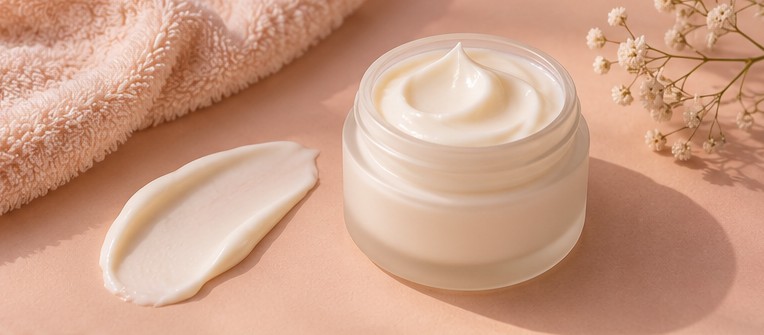
Start with a gentle cleanser and a moisturizer that feels comfortable on dry areas. Check whether dryness appears just after washing or later in the day before choosing what to change.
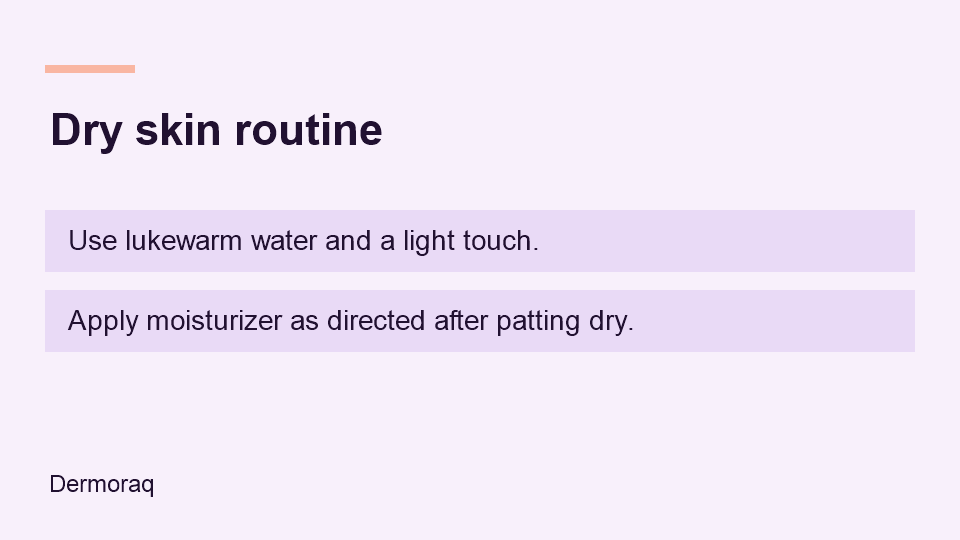
Read the first skincare routine guide
Begin with the part of your day that feels driest
Dry skin can feel tight, rough, or flaky, but those observations do not tell you why it happens. Notice which area feels different first. If your cheeks feel uncomfortable immediately after washing, start by reviewing the wash. If the skin feels fine at first and dries out several hours later, look at your moisturizer and where you spend the day. These are useful questions to ask about your routine. A persistent rash, cracking, or worsening discomfort is a separate reason to seek professional advice.
You do not have to change your whole bathroom shelf to make a useful adjustment. Choose one step that is easy to describe. For example, try a short wash at the sink with lukewarm water, or compare how your usual moisturizer feels when you use it as directed after patting dry. Keep your other products familiar. You will have a clearer idea of what helped when you take another look at the same area on a similar day.
Morning: rinse or wash as needed
Start by checking how your skin feels before anything goes on it. If your face feels comfortable, you might prefer a lukewarm rinse. If you want to cleanse, use a gentle cleanser according to the label and apply it with your fingertips. Rinse thoroughly with comfortably lukewarm water. Pat your face dry with a clean, soft towel. The American Academy of Dermatology recommends gentle washing and avoiding rough tools or scrubbing.
Choose a moisturizer meant for the area you want to treat. The AAD suggests applying moisturizer after gently patting the skin dry, while it is still slightly damp. Follow the directions on the product and any specific instructions for a prescribed treatment. If you have a dry cheek and a comfortable forehead, notice how the product feels in each place. A small area of dryness does not mean you need the richest texture across the face.
Use sun protection before outdoor exposure. Apply sunscreen as directed and keep the label available if you will need to reapply. Add shade and protective clothing where appropriate. Dry skin and sun protection are separate jobs in the routine. If a moisturizer with SPF helps you combine them, check that you can use it according to the sunscreen directions rather than applying it only where the skin feels dry. If it is easier to follow the directions with separate products, that is a reasonable choice too.
Evening: wash without making the dryness worse
Your evening wash can have a clear job: remove the products and buildup you no longer need on your skin. Check the directions if you wore long-wear makeup or a sunscreen with separate removal guidance. Use a remover intended for the area as directed, or use a gentle wash if that is sufficient. There is no need to add a second wash by default. If you see cleanser residue near your hairline or jaw, rinse rather than wiping harder with a towel.
Keep the wash short enough to stay comfortable. The AAD advises warm rather than hot water for dry skin and recommends limiting baths and showers to about five to ten minutes. At the sink you can often do the face wash separately from a long, warm shower. If you are accustomed to washing while standing under the shower stream, try a gentler sink wash and observe how your cheeks feel afterward. This is an easy change to test without buying anything new.
After rinsing and gently patting dry, apply moisturizer according to its directions. Put it where you can reach it. This can be helpful if you often get distracted between washing your face and getting ready for bed. If you prefer a richer texture at night, use it where it makes sense. If you use a treatment with specific timing, keep those instructions readable so you can follow them without guessing from the rest of the routine.
Choose a texture you are comfortable wearing
A cream or ointment is often a useful option for very dry skin. The AAD recommends those forms over lotion for that situation. Still, read the actual label and choose a product intended for the area. A richer finish may feel comfortable on your cheeks at bedtime and too noticeable before work. A lighter lotion can be easy to spread, but may leave a dry area wanting more comfort later. Compare the result where and when you expect to use it.
Think about what you want to learn before you switch products. If your question is whether a cream feels comfortable on your cheeks at night, try it there according to directions on a regular evening. Keep your cleanser familiar and compare how your cheeks feel several hours later. If the question is about makeup, compare the feel in a normal morning routine while keeping sunscreen instructions intact. Different questions may have different answers.
Check the ingredient list if you know you react to something. For dry skin, the AAD recommends choosing fragrance-free products. A package that says unscented can still use ingredients that mask other odors. Look at the label rather than relying on whether you notice a smell. If you already know you react to a particular ingredient, follow professional guidance and check the current package even if you have used the brand before.
Compare the sink and shower before replacing products
A shower can be warm and relaxing, and it can also make it easy to keep your face under warmer water for longer than when you wash at a sink. If your skin feels tight only after showering, consider that difference. On one evening, use your usual cleanser at the sink with lukewarm water, a light touch, and a clean towel. Use your usual moisturizer afterward as directed. Compare how the same areas feel at the same point in the evening.
If the situation is different, make a short note. Perhaps you spent the day in cold weather, wore a scarf that rubbed your chin, or removed makeup differently. Those details may affect what you notice. You do not need to turn the routine into an experiment with strict rules. Just make the main change easy to identify. If the sink wash feels better more than once, you can use it when practical without needing to prove why it helps.
If you still feel dry after changing the wash, look at your moisturizer’s timing, texture, and intended area. A comfortable wash and a suitable moisturizer are two different decisions. You can find that one already fits and the other is worth changing. Avoid adding several optional products at once. If an item causes a reaction, stop using it and seek advice if symptoms are severe, persist, or worsen.
Adapt to a cold day, a workday, and travel
On a cold morning, consider what will be exposed when you go outdoors. A scarf and appropriate clothing may help you stay comfortable, but pay attention to rubbing where fabric touches an area that already feels dry. Use sunscreen according to its directions on exposed skin as appropriate to your plans. When you get home, note whether discomfort began outside or only after washing. Those are different patterns and may point toward a different next step.
On a workday, you may spend much of the time in a heated room. If one area feels dry several hours after getting ready, note when it happens. A moisturizer that you apply only in the evening may still suit your night routine. You might decide to use a suitable option in the morning as well, or to compare a texture that feels comfortable during work. Think about where you can keep the product and read its label if you need it later.
When you travel, take the products you already know how to use. Keep the directions with them and use gentle technique at the unfamiliar sink. If the schedule is busy, set out a clean towel before you wash. Try to avoid introducing several new cosmetics while water temperature, weather, and daily activities are changing. If a dry area appears, record it and make one adjustment you can maintain. You can revisit the rest once you are back to an ordinary day.
Separate a mild dry feeling from concerns that need advice
Mild dry comfort can change from day to day. If your skin has painful cracks, persistent redness or a rash, significant itching, or symptoms that are getting worse, seek professional advice. Keep the names of the products you used and describe what you notice before washing, right afterward, and later. A clear timeline can be more useful than a general description of your routine. Do not keep applying a product that you suspect is causing an ongoing reaction to see what happens.
If you already have a skin condition, ask the clinician who manages it about changes to the routine. A general guide cannot replace instructions for a particular treatment. Keep the prescribed steps in the order you were given. When choosing a moisturizer or cleanser, mention what you are using and where you feel discomfort. Ask whether the product is suitable for that area before trying to fit several new things into the routine.
Make a short record for the next comparison
Write the time, area, what you did, and how it felt later. A note might read: “Tuesday evening, cheeks tight after hot shower. Thursday, washed at sink with lukewarm water and the same cleanser and moisturizer. Cheeks more comfortable at bedtime.” These two evenings do not establish a cause. They tell you which version of the wash you might try again. Keep the observations grounded in what you can see or feel rather than guessing which ingredient did the work.
You can also write a product comparison: “Usual lotion easy to spread but cheeks felt dry again before dinner. Cream felt comfortable at bedtime when used on cheeks.” Add the product names and dates so the note makes sense later. If you do not notice a useful difference, you can keep the routine you already know or choose another specific question. The record is only as long as you need it to be.
Build a routine around two ordinary moments
Pick a morning when you do not have to leave in a rush, and an evening when you are finished with the day’s products. Read the directions before you use anything new. In the morning, decide whether to rinse or wash, then apply moisturizer where needed and use sunscreen as directed before outdoor exposure. In the evening, remove what needs to come off, wash gently, and apply a suitable moisturizer. Put those steps in places where you will see the products when you need them.
For a busy week, prepare a simpler version of each moment. Keep a soft towel near the sink and your moisturizer beside it. Take the labeled sunscreen when you expect to be outdoors later. A routine that is easy to repeat after a long day gives you a better baseline than a more elaborate routine you only use on weekends. Once you have a baseline, compare one change instead of trying to improve everything at once.
Choose what to take from your own bathroom shelf
Before buying another moisturizer, look at the one you already have. Check whether it is meant for the area, how the directions say to apply it, and whether it is still within date. If it works on some areas but not on your cheeks, keep the useful part of the routine. You might choose a richer option for your cheeks without replacing the product you already enjoy using elsewhere.
When you shop, describe the job as clearly as you can. “Something comfortable on my cheeks after washing at night” is more useful than “something for dry skin” if you are looking at several suitable textures. Compare a smaller package if you are not sure you will like the finish. Keep the label so you can use it as directed and review the ingredient list if a problem appears.
If you are comparing your usual product with a new one, do it on ordinary evenings. Leave the wash and other care familiar where practical. Notice how the same area feels afterward and later in the evening. If the new product is hard to use or does not help with the reason you bought it, you do not need to make a second change at the same time.
Questions readers ask when their skin feels dry
Should I use cleanser every morning? If a rinse is comfortable and suits what you need to remove, it can be a reasonable starting point. If you prefer to cleanse, choose a gentle option and use it as directed. Watch how the same areas feel after washing and later in the day. Follow any specific instructions from a clinician.
Do I need a different product for every dry area? Start with whatever fits the intended area and feels comfortable. The cream you use on your face may be different from a product labeled for lips or hands. Use products according to their directions. A routine does not need more items than you can explain and use.
Can I use the same moisturizer all year? If it still feels comfortable, keep it. If an area feels dry when the weather changes, decide whether a change in timing, texture, or washing technique would address it. Try one change on a comparable day. You may only need a richer texture on one area or for a particular season.
What if I still feel tight after moisturizing? Note where it happens and how long it lasts. Review the wash and the moisturizer’s directions. If the symptoms are persistent, severe, or worsening, seek advice. Bring the product labels and a short timeline so you can discuss the circumstances rather than trying to guess the cause.
Choose the one change that would help tonight
Set out a towel, decide whether to wash at the sink, and read the directions on the moisturizer you have. You can start with familiar products and make the wash gentler. If your skin still feels dry later, write down where and when. That gives you a useful next question. A dry-skin routine works best when it addresses the moment you actually notice discomfort and is simple enough to repeat.