
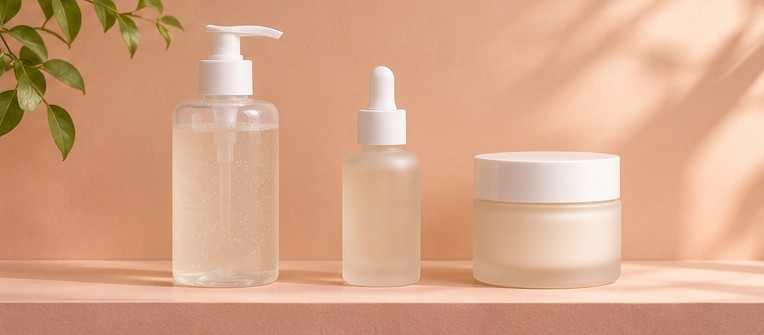
If your skin usually feels comfortable, start with a routine that fits an ordinary day. Change a step when you have a clear reason to.
What balanced means in this guide
Balanced describes skin that generally feels comfortable during your ordinary routine. It may still look shinier after a workout or feel dry after a cold walk. The word is a useful shorthand for what you usually notice, not a diagnosis or a permanent label. If your skin feels comfortable most days, the first question is what you already do that helps keep it that way. You may already have the products you need.
Morning: make room for the steps you use
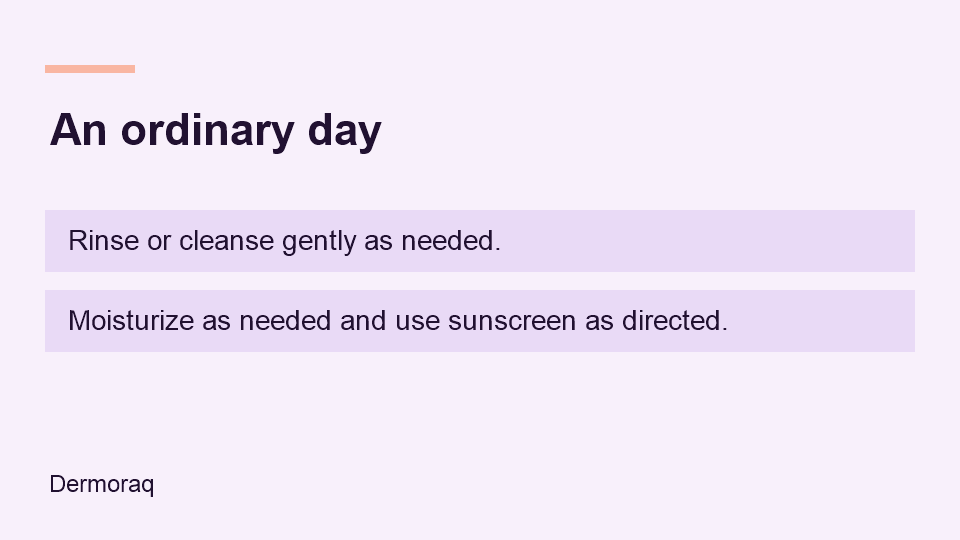
Start with a gentle rinse or wash if you need it. If you use cleanser, use your fingertips and lukewarm water, rinse, and pat dry. Use moisturizer where it feels helpful and follow its directions. If you are going outdoors, apply sunscreen according to its label. Plan for reapplication when the directions call for it, and consider shade, protective clothing, and a hat. If you wear makeup, keep the sunscreen directions in view when you work out how the layers fit together.
Think about the actual day rather than a perfect morning. If you have five minutes to get ready, set out the basics where you can see them. If you are planning a long outing, keep the sunscreen in its labeled package so you can read the directions later. A routine you can do on an ordinary Tuesday is a useful starting point. You can always change it when the day calls for something else.
Evening: wash gently when the day is done
A gentle evening wash can help remove the day’s buildup and the products you wore. Read any instructions for removing makeup or waterproof products and use an appropriate method. Rinse carefully near the hairline and around the nose. Pat dry with a clean, soft towel. If your skin feels dry, use a suitable moisturizer according to its directions. If you have a prescribed product, follow the directions you were given and ask your clinician or pharmacist if you need help fitting it into the routine.
If you regularly delay washing until you are too tired, move it to a time when you are finished with the products you wore. Keep a towel and cleanser ready so you can keep the technique gentle. The easiest change may be where you put the bottle or when you use it rather than which cleanser you buy.
Adjust only when something gives you a reason
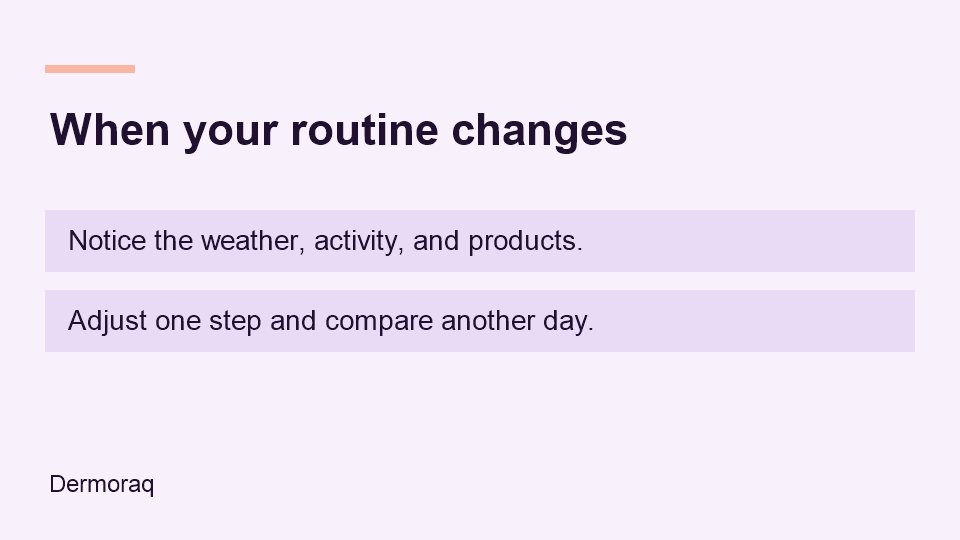
When the weather turns cold, notice whether you feel dry immediately after a shower or much later. If the feeling follows a hot wash, compare a shorter wash with lukewarm water before changing every product. If it appears later on one area, consider a moisturizer for that area. Keep the other steps familiar when practical. Then you have something to compare with the next ordinary day.
On a hot day you might notice a shiny forehead by lunch. Shine alone does not mean you need to scrub or add another cleanser. Pay attention to comfort, what you wore, and whether you have sweated heavily. The American Academy of Dermatology recommends gentle washing after heavy sweating. A wash after an early run can be the morning wash you already planned. If the exercise was outdoors, follow your sunscreen label for reapplication.
Travel often changes more than one thing at once. The bathroom, water temperature, products, and daily schedule may all be different. Keep familiar products in their labeled containers when you can. If you notice tightness, note what changed before deciding you need a new routine. You can make a small adjustment while you are away and revisit the question after an ordinary day at home.
Give an optional product a clear job
You might be interested in a lighter moisturizer for work or a product that removes a particular makeup. Read the directions first and compare one new product at a time. Keep other steps familiar where practical. A short note such as “tried the lotion on both cheeks after my usual evening wash” helps you know what you learned. If an optional product makes a comfortable routine harder to repeat, you can decide whether it belongs there.
If you have a history of reactions or know you react to an ingredient, check the label and seek professional advice as appropriate. If a product causes an unexpected reaction, stop using it. Get clinical advice if symptoms are severe, persist, or worsen. Keep the name and label so you can describe what you used and where you applied it.
Three situations, one basic routine
For a normal workday, you might rinse, moisturize if needed, and use sunscreen before going outside. Wash gently at night. If you worked late and only have time for the essentials, that is the version you already know. A simple routine lets you get to bed without weighing up several optional products.
For a weekend outdoors, keep the same gentle wash and moisturizer you ordinarily use, and spend the extra attention on sun protection. Read the label and pack the sunscreen where you can reach it. Use shade and protective clothing as appropriate. Back home, use a gentle removal method that fits the sunscreen or makeup you wore.
For an unusually dry day, notice whether one area could use more comfort. Use a suitable moisturizer where needed and check whether changing the water temperature helps. Keep the rest of the routine steady long enough to recognize whether the change actually fits the problem. One dry afternoon does not require buying a full shelf of new products.
A useful way to keep track is to write one line for the morning and one for the evening. Leave a separate note for exercise and outdoor plans. If you switch products, record why. Reading those notes after a few ordinary days is often enough to tell whether the routine still works for you and where a small adjustment would help.
Questions to ask before you add a step
Do I need a toner or serum to keep my skin balanced? Start with a gentle wash, moisturizer when useful, and sun protection. Consider an extra product when you know what job you need it to do and can follow its directions. An extra step does not have to be a daily commitment if it has a specific occasional use.
Does balanced skin stay the same year-round? You may notice changes in texture or comfort with the weather, activity, or products you use. Review the day and the part of your face involved. You can adapt an ordinary routine without adopting a new label every time the weather changes.
What should I take away from this guide? Keep the version that feels comfortable and works on your usual days. When you change something, record the reason and look at how it feels after a similar day. If a problem keeps coming back, talk with a dermatologist rather than relying on a skin type label to explain it.