

Observe what changes across different areas and times. A brief record of comfort after washing can help you decide what to compare without trying to diagnose a skin condition.
Read the first skincare routine guide
Start with an area and a time
Instead of asking whether your whole face is always dry or oily, pick an area and a time. Your cheeks may feel tight just after washing, while your forehead looks shiny in the afternoon. Record each observation separately. The useful detail is not which permanent label applies. It is what you can notice again next time, under similar conditions. That helps you choose a small change that has a purpose.
Look at an ordinary day as a sequence. Notice comfort before washing, just after rinsing and drying, and later in the day. If you see a change, note whether the weather, your activity, or the products were different. A day spent outside in cold wind is not the same comparison as a normal day at your desk. You do not have to control everything. Write down obvious differences so you can recognize them when you read the notes later.
Look for patterns across a few ordinary days
Try using the same simple routine for a few days, if it is comfortable and you can follow the directions. Cleanse gently as needed, moisturize where useful, and follow sunscreen directions for outdoor exposure. Keep any prescribed treatments as directed. Use a brief note after washing or at a time when you usually notice discomfort. A clear example is “cheeks felt tight for twenty minutes after the shower, forehead felt normal.” You can compare that with another evening at the sink.
If your routine looks different each day, separate a regular day from a special occasion. The days when you wear long-wear makeup or swim may require different removal steps. Check product directions. A change you notice only after a special removal step may be easier to investigate if you know which products were involved. You may still have a comfortable routine on ordinary days. Try not to replace it based on a different kind of evening.
What the common labels can help you notice
Dry is a useful word when an area often feels rough, tight, or visibly flaky. Different conditions can cause symptoms like these, so the word does not explain a diagnosis. Observe whether the dryness starts after hot water or appears much later. If it is mild, try a gentle washing technique and consider a suitable moisturizer. If it is persistent, painful, worsening, or accompanied by a rash, seek professional advice.
Oily is a useful description when you often notice a shiny or greasy finish. Take care to distinguish what your skin looks like from the finish of the product you just applied. Check how your skin feels before you apply anything and later in a familiar setting. Shine is not a reason to scrub. The American Academy of Dermatology recommends washing gently and avoiding rough technique. If some areas feel uncomfortable, treat that as its own observation.
Combination describes different patterns in different areas. A forehead can look shiny while cheeks feel dry. Compare those areas separately, and consider whether they need different amounts or textures of moisturizer, as directed. Do not assume the same pressure, cleanser, and moisturizer must be increased everywhere just because one area feels different. A small change on one area is often easier to evaluate.
Sensitive is a practical word for someone who notices stinging, redness, or other reactions with products. It does not tell you which product or condition is responsible. Keep familiar products, check ingredients and warnings, and introduce optional products one at a time. If a product causes an unexpected reaction, stop using it and follow the label. Get clinical advice if symptoms are severe, persistent, or worsening. A record of the products and timing can be useful during a visit.
Balanced describes a routine that generally leaves you comfortable. You may still notice changes in cold weather or after a workout. You can keep the steps you already use and adjust one when you have a specific reason. Your observation can change from one week to another without requiring a new set of products every time.
Use the observations to choose one small change
If your cheeks regularly feel tight after the shower, compare washing at the sink with lukewarm water. Keep the cleanser and moisturizer familiar, and pat dry with a soft towel. Later that evening, check the same areas. If the change helps, repeat it on a comparable day. If the tight feeling continues, look at the cleanser directions and whether a moisturizer helps, or ask for help if symptoms persist. You do not have to make every change in the first evening.
If your forehead seems shiny only after applying several layers, note the order and what the finish looked like before them. Try leaving out one optional cosmetic on a day when you can. Keep any prescribed steps and use sunscreen as directed. Compare the same area at roughly the same time. If there is no difference, that is useful information. You can keep the routine you prefer or decide what to compare next.
If you cannot work out which product might be causing irritation, avoid trying several replacements at once. Keep the original packages. Write a short timeline with what you applied and when the symptoms began. Consult a clinician if the symptoms are significant, persistent, or worsening. It is more helpful to bring that record than to decide your skin falls into a single category based on the experience.
A short log you can reuse
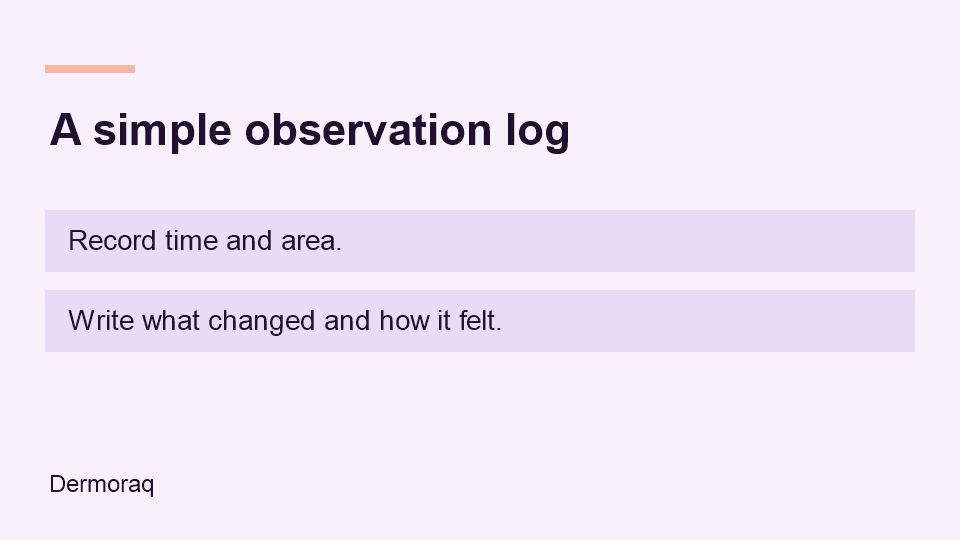
Write down the date and what was unusual about the day, if anything. In the morning, note where your skin feels comfortable or dry. After washing, note whether the feeling changed. Later, check what you noticed at the same areas. If you used a new product, record the exact name and where you applied it. The notes can be short enough to keep on your phone.
A sample entry might read: “Tuesday, ordinary workday. Cheeks comfortable before washing. Tight after ten minutes. Used warm water at the sink, usual cleanser, and a soft towel. Forehead shiny after lunch, no discomfort.” An entry like that helps you decide what to compare. You might try a cooler wash while keeping the other steps familiar, or consider a moisturizer on the cheeks if the washing technique is already gentle. There is no need to act on every detail at once.
Look back after a few ordinary days and ask what repeats. If the same feeling occurs in the same area at the same point in the routine, it gives you a better place to start than a single unusual result. If most days are comfortable, you can keep your usual routine. If the observations are scattered, note whether the days were similar enough to compare. You can wait before buying a new product for a problem that has yet to become clear.
Questions about making sense of the record
Can I use a face photo to tell what my skin needs? A photo can show what the skin looked like at a particular time, but it cannot tell you how it felt or diagnose the cause. Use it as part of your record if helpful, and keep notes about products, timing and comfort. If you seek advice, a picture can be useful when the appearance has changed by the time you are seen.
Should I avoid moisturizer if part of my face is oily? Notice what that area needs, and whether the product you use feels comfortable there. You may prefer a light texture or choose to use it where you need it, according to the label. Do not make the choice for your entire face based on one area that looks shiny.
What should send me to a clinician? Recurring irritation, a persistent rash, painful cracking, or symptoms that worsen are reasons to seek professional advice. Bring the products or photos of the packaging and describe what you notice before and after applying them. If you have been given a treatment, follow the directions and ask the prescriber how your observations fit into its use.
Keep a baseline you can return to
A baseline is the ordinary version of your routine that you can describe without looking at a shelf full of products. Write down what you normally use to wash, what moisturizer you use and where, and how you follow sunscreen directions when outdoors. You can include the timing of a prescribed product if that helps you follow instructions. Keep a copy where you can read it when you are deciding whether an optional product belongs in the routine.
Look at your baseline before a trip, a change in weather, or a busy week. If it is already comfortable, you may only need to pack the familiar products in labeled containers. If something feels different away from home, note the circumstances before assuming the whole routine needs an overhaul. It is possible to respond to a dry area or a day of heavy sweating without making a lasting change everywhere.
After a few days, check whether your notes point to a decision. You might keep the baseline, compare a gentler wash, or seek advice for a pattern you cannot explain. Any of those can be a useful outcome. The record is there to help you choose a practical next step.
Pick a useful next question
A useful question is specific enough to answer in your actual routine. Try “Do my cheeks feel more comfortable after a gentle wash at the sink?” or “Which area needs a lighter finish under sunscreen?” Keep the other steps steady and notice the answer on a comparable day. The result can guide one decision without forcing you to label your entire face.